
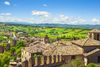
11 Villages in Emilia-Romagna that are Lost in Time
Discover the Most Charming Villages in Emilia-Romagna
Emilia-Romagna boasts villages that appear as if they are lost in time, as though plucked straight from the pages of history. From north to south, east to west, the region is adorned with towers and fortresses, castles and noble residences, ancient churches and monasteries, all standing proudly in town centers surrounded by pristine natural beauty.
What could be better than wandering the dreamlike narrow streets that wind their way to fortresses, searching for the perfect, one-of-a-kind selfie backdrop? Join us as we uncover the timeless charm of Emilia-Romagna’s villages.
11 villages in Emilia-Romagna that are lost in time
- Bobbio
- Castell’Arquato
- Brisighella
- Dozza
- San Leo
- Fontanellato
- Gualtieri
- Busseto
- Verucchio
- Montegridolfo
- Vigoleno
1. Bobbio
Discovering the history and legend behind the Devil’s Bridge

Ideal para: Econômico, História, Foto
In Bobbio, the enchanting beauty of Emilia intertwines with magical medieval legends. Nestled against the scenic backdrop of Val Trebbia (Trebbia Valley), bordering Liguria, Bobbio dates back to the early Middle Ages and holds traces of the Irish monk Saint Columbanus. The Ponte Gobbo (Humpback Bridge), named for its uneven shape, has become a symbol of the town.
Legend has it that Saint Columbanus convinced the devil to build the bridge overnight in exchange for a soul, only to trick him and save the soul. While the truth of the tale remains uncertain, the town’s monastery and the Cattedrale di Santa Maria Assunta are undoubtedly among Bobbio’s most cherished sites. Explore Bobbio and let its legends spark your imagination.

Bobbio
2. Castell’Arquato
Home of an imposing fortified castle where the past lives on
Ideal para: Casais, História, Foto
Castell’Arquato, located in the province of Piacenza, is a quintessential medieval town that stands proudly atop a hill in Val d’Arda. With its ancient houses and the impressive Visconti Castle dominating the skyline, the town offers a captivating glimpse into the past.
The fortified complex is characterized by striking crenelated walls and defensive towers, making it one of the area’s most remarkable military constructions. Beyond the fortress, explore Castell’Arquato’s other attractions, such as the Podestà Palace, which opens its doors for exhibitions and cultural events, and the Romanesque Collegiate Church, adorned with frescoes from various eras.
Castell'Arquato
3. Brisighella
A small town with a rich food and wine tradition
Ideal para: Alimentação, História, Foto
Brisighella is a town with three distinct personalities, showcasing its rich history, breathtaking landscape, and vibrant culinary scene. Its main attractions are perched on three hills: Santuario del Monticino (Sanctuary of Monticino), Rocca Manfrediana (Manfrediana Castle), and Torre dell’Orologio (Clock Tower).
Nestled within the unique scenery of the Vena del Gesso Romagnola Regional Park, the historic center’s alleys and streets offer strikingly beautiful views among their nooks and crannies. Mealtimes in Brisighella promise an unforgettable experience, too. Make sure to try olio extravergine d’oliva DOP Brisighella (Brisighella DOP Extra Virgin Olive Oil), carciofo Moretto (Moretto artichoke), and vino Sangiovese DOC (DOC Sangiovese wine).
Brisighella
4. Dozza
Old houses brought to life with colorful murals
Ideal para: Econômico, História, Foto
Dozza, located near Bologna, is a charming small town that doubles as an open-air contemporary art gallery. Like many towns in the region, Dozza dates back to the Middle Ages and is dominated by a castle, Rocca Sforzesca di Dozza. But what makes it unique are the vibrant murals that have breathed new life into its streets and houses.
The large and dazzlingly colorful artworks are the result of the Biennale del Muro Dipinto (Biennial Exhibition of the Painted Wall), an event held every other year since the 1960s. Visit Dozza during this art festival to witness how artists from across Italy unleash their creativity on the town’s walls.
Dozza
5. San Leo
A fortified town stands on a rocky spur
Ideal para: História, Foto
San Leo is a picturesque village that resembles a fairy tale, featuring a large fortress perched on a rocky spur visible from afar. Nestled in the heart of Val Marecchia (Marecchia Valley) in the province of Rimini, the town is linked to two legendary figures. One is Saint Leon, the town’s founder and patron, after whom the town was renamed from Montefeltro. The other is the Count of Cagliostro, an alchemist imprisoned in the fortress for heresy.
These historical events have given the town its mysterious, spiritual atmosphere that continues to permeate its quiet, ancient streets. Be sure to visit the atmospheric Pieve di Santa Maria Assunta (Parish Church of Santa Maria Assunta), which retains its original 9th-century layout.
San Leo
6. Fontanellato
Navigating a bamboo labyrinth and a moated castle
Ideal para: Casais, Famílias, História
Fontanellato, a tranquil town in the province of Parma, has origins deeply intertwined with history. Its name, meaning “extended spring,” reflects the local landscape’s features, particularly the natural reserves in Bassa Parmense, also known as fonatinili. Fontanellato is renowned for its enchanting castle, Rocca Sanvitale, surrounded by a deep, water-filled moat. Inside, the castle rooms are adorned with frescoes by Parmigianino, along with paintings, furnishings, and artifacts from previous centuries.
Another notable attraction is the Labirinto della Masone, the largest bamboo maze in the world. This star-shaped labyrinth includes a complex of buildings featuring Neoclassical elements. Be sure to check the calendar for exhibitions, conferences, and other cultural events that regularly take place here.
Fontanellato
7. Gualtieri
The adopted hometown of naïf painter Ligabue
Ideal para: Casais, História, Foto
Gualtieri stands gracefully on a bend of the Po River, nestled in the heart of the Pianura Padana (Po Valley), a region woven with land and water. The town’s urban design is credited to the Bentivoglio family and is considered a masterpiece, especially Piazza Bentivoglio, which art historians regard as one of Italy’s most beautiful squares.
The perfectly square piazza is framed by buildings with porticos on three sides, with the fourth side featuring Palazzo Bentivoglio. This historic building houses the Fondazione Museo Antonio Ligabue, dedicated to the renowned naïf painter. Visit this museum to immerse yourself in the artistic legacy of Ligabue, who lived in Gualtieri for much of his life and created his most significant works here.
Gualtieri
8. Busseto
Where Verdi’s legacy lives on
Ideal para: História, Foto
Busseto is another small town in Emilia-Romagna whose history intertwines with the destiny of a great artist. Located in Bassa Parmense, it’s the birthplace of the renowned composer Giuseppe Verdi. This must-see spot for classical music fans includes several sites connected to the great Maestro, including the Roncole district, home to the Birthplace of Giuseppe Verdi, and the Casa Barezzi Museum, located in the historic residence of the composer.
Be sure to explore the rest of the town, including the renowned Collegiate Church of San Bartolomeo Apostolo, built in Gothic and Rococo style, and Church of Santa Maria degli Angeli, housing a famous 15th-century terracotta sculptural ensemble by Mazzoni.
Busseto
9. Verucchio
Witnessing the power of time intertwining with spiritual traditions
Ideal para: Casais, História, Foto
Verucchio is a small town on a rocky spur, dominating the green Valmarecchia valley. The Malatesta family’s immense power originated in the Rocca Malatestiana (Malatesta Castle), which stands in the upper part of the town. This noble family was among the most influential in medieval times. Today, the fortified complex is open to tourists, offering breathtaking views from the Apennines to the sea near Rimini.
Another must-visit site is the Convento Santa Croce - Ordine dei Frati Minor (Monastery of the Santa Croce - Order of Friars Minor), featuring a cloister with a centuries-old cypress tree, said to be planted by Saint Francis himself in the 13th century. Experience the echoes of history as you explore this legendary site.
Verucchio
10. Montegridolfo
The borderland that’s seen clashes of opposing powers
Ideal para: História, Foto
Montegridolfo has always had the spirit of a borderland, due to its location between Emilia-Romagna and Marche. Once the center of power struggles between the Montefeltro and Malatesta families, it later became known as a battlefield in WWII as the infamous Gothic Line passed nearby. At the Museo della Linea dei Goti, visitors can retrace this dramatic chapter of history through artifacts, weapons, and propaganda material from both sides.
Despite its turbulent past, Montegridolfo retains its medieval charm, with high walls, towers, and ancient churches housing valuable artworks. The town is also renowned for its olive oil production, a tradition that dates back over a thousand years, so be sure to sample the local flavors on offer.
Montegridolfo
11. Vigoleno
Strolling through a fortified village in Piacenza
Ideal para: Alimentação, História, Foto
Vigoleno is a village that has truly stood the test of time. With its majestic crenelated walls, keep adorned with arrow loops and battlements, and the inner courtyards of its castle, it’s a must-visit destination. Wandering through its historic streets, you’ll feel transported to an era when the castle was home to dames and knights.
The village’s architectural beauty extends beyond the castle, with perfectly preserved buildings like the Pieve di San Giorgio (Parish Church of San Giorgio), a splendid Romanesque church at the village’s heart. After exploring, satisfy your hunger at a local restaurant with some pisarei e faśö, Piacenza gnocchi served in a savory sauce of beans, lard, onions, and tomato.
Vigoleno
Este artigo inclui opiniões da equipe editorial dos Go Guides. A Hoteis.com remunera os autores dos textos publicados neste site, o que pode incluir custos de viagens e outras despesas.